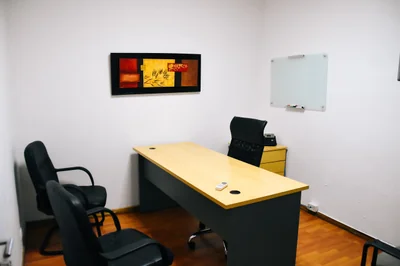
You know that feeling in April? The one where you're staring at a spreadsheet, receipts scattered everywhere, wondering if the coffee you just drank is a "business expense." You're not alone. In 2026, over 38% of small businesses operate primarily from a home office, according to the Small Business Administration. Yet, a staggering number of those owners leave thousands of dollars on the table every year because they're either intimidated by the tax code or terrified of an audit. I've been there. My first year running a consultancy from my spare bedroom, I claimed a grand total of $412 in deductions. I was so scared of getting it wrong, I practically gave the IRS a bonus. The next year, with a better system, I legitimately wrote off over $18,000. The difference wasn't magic—it was just knowing the rules.
Key Takeaways
- The home office deduction is more accessible than you think, but the "exclusive and regular use" rule is non-negotiable.
- You can deduct a percentage of nearly all home-related costs, not just rent or mortgage interest.
- Technology, vehicle use for business, and even health insurance premiums are major deduction categories for the self-employed.
- Meticulous, digital record-keeping is your best defense in case of an audit and your key to maximizing deductions.
- Choosing the right business structure, like an LLC or S-Corp, can unlock additional tax-saving strategies beyond simple deductions.
Demystifying the Home Office Deduction: The Two Methods
Let's cut through the noise. The home office deduction is the cornerstone, but it's shrouded in myth. The biggest one? That claiming it is an automatic audit trigger. In my experience, that's only true if you're sloppy or dishonest. The real rule is simple: the space must be used exclusively and regularly for your business. That guest bedroom/office hybrid? If your aunt sleeps there for a week at Christmas, it doesn't qualify. My own mistake was using my designated office desk for paying personal bills. I had to re-calculate everything. Be brutal with your assessment.
The Simplified vs. Regular Method: A 2026 Breakdown
You have two paths, and the right one depends entirely on your numbers.
- The Simplified Method: This is the easy button. For 2026, you can deduct $6 per square foot of your home office, up to 300 square feet (max $1,800). No receipts, no depreciation calculations. It's perfect for new businesses or those with simple, low-cost home offices.
- The Regular Method: This is where you itemize. You calculate the percentage of your home used for business (office sq. ft. / total home sq. ft.) and apply that percentage to a slew of expenses. This includes mortgage interest, rent, insurance, utilities, repairs, and depreciation.
Which is better? In 2023, the IRS reported that about 40% of filers using the home office deduction chose the simplified method. But for many, especially in high-cost areas or with dedicated, expensive home offices, the regular method wins by a mile.
| Factor | Simplified Method | Regular Method |
|---|---|---|
| Calculation | $6 per sq. ft. (max 300 sq. ft.) | Percentage of home expenses |
| Max Deduction | $1,800 | Unlimited (based on actual expenses) |
| Record-Keeping | Minimal (just square footage) | Extensive (all utility bills, mortgage statements, etc.) |
| Best For | New businesses, small/low-cost offices, those who hate paperwork | Established businesses, larger offices, high home expenses |
| Depreciation | Not allowed | Allowed (can be a significant deduction) |
What "Exclusive Use" Really Means in Practice
This is the hill the IRS will die on. The space doesn't need to be a separate room, but it must be a distinctly identifiable area used only for business. A desk in the corner of your living room where you also watch Netflix fails. A partitioned-off section of a basement that only houses your inventory and work desk passes. Document this with photos at the start of the tax year. It's your first line of defense.
Beyond the Office Walls: Your Home as a Business Asset
Once you've nailed the office itself, look outward. Your entire home becomes a potential source of deductions, prorated by that business-use percentage. This is where people get timid—don't. If 10% of your home is your office, then 10% of your monthly internet bill, electricity, and even homeowners insurance is deductible. But it goes deeper.

Consider repairs and maintenance. If you fix a leaky faucet in the kitchen, that's personal. But if you repaint your home office or repair the dedicated air conditioning unit for that room, that's 100% deductible. In my third year, I had to replace a window in my office. Full deduction. The key is direct vs. indirect expenses. Direct (office-only) get 100%. Indirect (whole house) get the percentage.
A Quick Case Study: Sarah's Consultancy
Sarah runs a marketing consultancy from a 200 sq. ft. office in her 2,000 sq. ft. home (10% business use). In 2026, her annual costs are:
- Mortgage Interest + Insurance: $15,000
- Utilities + Internet: $4,800
- Repaint Office (direct expense): $500
Using the Regular Method, she deducts 10% of the indirect expenses ($1,500 + $480 = $1,980) plus the full $500 repaint, for a total of $2,480. The Simplified Method would have given her only $1,200 (200 sq. ft. x $6). By tracking her actual costs, she saved over $1,200 more. This kind of analysis is critical for your long-term financial planning.
Technology, Vehicle & Health: The Big-Ticket Deductions
Your home is just the stage. The tools you use on it are where the real money often lies.
Technology & Supplies: This is straightforward but often underclaimed. Your laptop, printer, software subscriptions (like project management or design tools), and even that ergonomic chair are deductible. You can either deduct the full cost in the year of purchase (Section 179 deduction or bonus depreciation, subject to limits) or depreciate it over its useful life. For a $2,500 computer, taking the full deduction now can be a huge boost.
Vehicle Use: If you drive for business—meeting clients, buying supplies, going to the post office—those miles are gold. For 2026, the standard mileage rate is 68 cents per mile (always verify the current year's rate). You must keep a contemporaneous log: date, purpose, starting/ending odometer, and total miles. An app like MileIQ automates this. The alternative is tracking actual expenses (gas, maintenance, insurance) prorated by business use percentage, but the mileage method is almost always simpler and just as lucrative.
Health Insurance Premiums: This is a massive one for sole proprietors, partners, and LLC members. You can deduct 100% of your health, dental, and long-term care insurance premiums for yourself, your spouse, and dependents. It's taken as an adjustment to income on Schedule 1, meaning it reduces your Adjusted Gross Income (AGI)—a very powerful place for a deduction.
Record-Keeping: Your Audit-Proof System for 2026
All these deductions are worthless if you can't prove them. The old shoebox method is a one-way ticket to anxiety. Here's the system I've used for five years without a hiccup.

- Go Digital, Immediately: Use a dedicated business bank account and credit card. Link them to cloud accounting software like QuickBooks Online or FreshBooks. Every transaction is captured.
- Receipt Management: Snap a photo with your phone the moment you get a receipt. Use the "scan" feature in your accounting app or a dedicated app like Expensify. Categorize it right then.
- The Quarterly Review: Every three months, block off two hours. Reconcile your accounts, review your mileage log, and ensure every digital receipt has a matching transaction. This prevents the year-end nightmare.
This discipline doesn't just save taxes; it gives you a real-time view of your profitability, which is essential for making smart decisions about investing in growth tools or other resources.
Expert Tip: The "Home Office Audit Kit"
Prepare a virtual folder now. Include: a floor plan of your home with the office area marked, dated photos of the exclusive-use space, a copy of your mortgage or lease, and a one-page summary of your calculation method. If the IRS ever asks, you send this PDF within an hour. Confidence is the best deterrent.
Strategic Moves Beyond Deductions
Deductions reduce your taxable income. But your business structure can reduce your actual tax rate. This is the next-level play.
Operating as a Sole Proprietorship (Schedule C) is simple, but you pay the 15.3% self-employment tax on all your net profit. Forming an LLC and electing S-Corp status for tax purposes can allow you to pay yourself a "reasonable salary" (subject to employment tax) and take additional profit as distributions, which are not subject to self-employment tax. The savings can be substantial as your profit grows. Deciding on the best legal structure is a foundational choice with major tax implications.
Also, don't forget retirement contributions. A SEP IRA or Solo 401(k) lets you contribute a significant portion of your net earnings (up to $69,000 for 2026, depending on the plan), which is deductible. You're literally saving for the future and lowering this year's tax bill.
Your Next Financial Move
Look, understanding these deductions isn't about being greedy. It's about claiming what's legally yours to reinvest in your business's health and your own sanity. The government provides these incentives for a reason—to support the economic engine that is home-based business. Ignoring them is like refusing a tool you've already paid for.

Your action for this week isn't to file your taxes. It's to set up one system. Open that separate business bank account. Download a mileage tracker. Or simply measure your office square footage and calculate which deduction method might serve you better. One step. The money you save could fund your next marketing campaign, a new piece of software, or just a well-deserved break. Stop leaving your money on the table.
Frequently Asked Questions
Can I claim the home office deduction if I'm a renter?
Absolutely. The rules are the same. Instead of deducting mortgage interest and depreciation, you deduct the business-use percentage of your rent. This often makes the deduction even more valuable for renters in high-cost areas.
What if I use my car for both business and personal trips?
You can only deduct the business portion. This is why a meticulous mileage log is non-negotiable. You must separate the trips. The standard IRS stance is that commuting from your home to a "regular place of business" is personal. But if your home is your principal place of business, then driving to a client meeting, the supply store, or a coffee shop for a work session is 100% deductible business mileage.
Are meals still 50% deductible in 2026?
For most business meals, yes, the 50% limitation generally applies. However, there's an important exception: meals provided for the convenience of the employer on the business premises (like if you order lunch for your remote team during a working meeting) may be 100% deductible. The rules are nuanced, so keep detailed receipts noting the business purpose and attendees.
How do I know if I should hire a tax professional?
If your business is making a consistent profit, your deductions are becoming complex (vehicle, home office, equipment), or you're considering a change in business structure, hire a CPA or Enrolled Agent who specializes in small business. The fee is itself deductible, and they will almost certainly find savings you missed. Think of it as a strategic investment, not an expense.